

Sunday, September 30, 2012

Tuesday, September 25, 2012
Double Journal Entry #5
Traditional literacy is in media literacy. You have the ability to read and write which leads to having the ability to analyze and evaluate different things.
Quote:
The RAND Reading Study Group (2002), citing several studies, suggests that students who are proficient online readers are not necessarily proficient offline readers and vice versa.
Discussion:
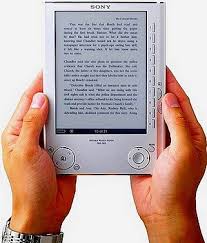
 I believe that this quote is wrong because I feel like when a person reads online it is the same thing if a person is reading a book or something. The only difference is when a person reads online I do not know for some people but I get distracted easy. But really what is the difference in online readers and offline readers because I can not think of anything.
Citations:
David, J. (2009, March). Teaching literacy media.
Quote:
The RAND Reading Study Group (2002), citing several studies, suggests that students who are proficient online readers are not necessarily proficient offline readers and vice versa.
Discussion:
Citations:
David, J. (2009, March). Teaching literacy media.
Friday, September 21, 2012
Wikipedia Worksheet
- Start with the main page. Does it have any cleanup banners that have been placed there to indicate problems with the article? (A complete list is available at http://en.wikipedia.org/wiki/Wikipedia:Template_messages/
Cleanup.)
Any one of the following cleanup banners means the article is an unreliable source:
This article or section has multiple issues. no This article may require cleanup to meet Wikipedia's quality standards. no The neutrality of this article is disputed. no The factual accuracy of this article is disputed. no This needs copy editing for grammar, style, cohesion, tone or spelling. no This may contain material not appropriate for an encyclopedia. no This article only describes one highly specialized aspect of its associated subject. no This article requires authentication or verification by an expert. no This article or section needs to be updated. no This article may not provide balanced geographical coverage on a region. no This is missing citations or needs footnotes. no This article does not cite any references or sources. no
- Read through the article and see if it meets the following requirements:
Is it written in a clear and organized way? yes Is the tone neutral (not taking sides)? yes Are all important facts referenced (you're told where they come from)? yes Does the information provided seem complete or does it look like there are gaps (or just one side of the story)? looks coomplete
- Scroll down to the article's References
and open them in new windows or tabs. Do they seem like reliable
sources? (For help in determining the general reliability of a source,
check out the Knowing What's What and What's Note: The 5 Ws (and 1 "H") of Cyberspace handout.)
Reliable references:
yes
Possibly unreliable references:
no
Definitely unreliable references:
no
- Click on the Discussion tab. How is the article rated on the Rating Scale (Stub, Start, C, B, GA, A, FA)? What issues around the article are being discussed? Do any of them make you doubt the article's reliability.
- The article is rated C-Class. There is no issues being discussed. No it does not.
- Based on the above questions, give the article an overall ranking of Reliable, Partially Reliable or Unreliable.
- You may use a Reliable article as a source (but remember that even if a Wikipedia article is reliable, it should never be your only source on a topic!)
- You may use a Partially Reliable article as a starting point for your research, and may use some
of its references as sources, but do not us it as a source. - You should not use an Unreliable article as a source or a starting point. Research the same topic in a different encyclopedia.
How did you rank this article (Reliable, Partially Reliable or Unreliable)? Give at least three reasons to supportI rated this article as reliable. My three reasons for support is because I am taking education classes and my teacher has told us the same information they are telling me in Wikipedia, on Wikipedia it says that is is accurate information, and I have faith in the group committee that this information is not wrong.
your answer.
Three users:
I learned that the people who are editing this page has knowledge of education in them. This increases my confidence in the validity and reliability of information in Wikipedia because the article I found had little mistakes.
Thursday, September 20, 2012
Double Entry Journal #4
Quote:
“When you first come to Wikipedia, it really seems like a collection of articles. It seems like a bunch of pages about different topics. Now when you talk to people who are very involved in Wikpedia, it becomes a collection of people who are carrying out a project….Wikipedia was a place where people were coming together to write about the world and figure out what’s true about the world and what kinds of facts are important to know about the world. These are the kinds of things I think students should be doing.”
Discussion:
When I first looked at Wikipedia that is exactly what I thought that Wikipedia is just a collection of articles with different topics. When we was watching that video in class and reading those articles it really opened up my eyes. I agree that students should be writing about the world and figuring out what is true about the world and what kind of facts are important to know about the world. I mean I still believe that Wikipedia can sometimes have false information but the people who work on Wikipedia has dedication in trying to get the information correct. I do believe teachers should let students use Wikipedia for research purposes because Wikipedia gives a lot of accurate information and goes into the subject more to you can understand it but still do not site it. It teaches you about media. It develops young people's critical and creative abilities. Wikipedia promotes the development of 21st century skills by Wikipedia showing that if a group of people worked together they can achieve excellence like how the group of people work together on Wikipedia.

Picture:
I chose a picture of the Wikipedia emblem.
Citation:
Jenkins, H. (2007, june 26). What wikipedia can teach us about the new media literacies.
“When you first come to Wikipedia, it really seems like a collection of articles. It seems like a bunch of pages about different topics. Now when you talk to people who are very involved in Wikpedia, it becomes a collection of people who are carrying out a project….Wikipedia was a place where people were coming together to write about the world and figure out what’s true about the world and what kinds of facts are important to know about the world. These are the kinds of things I think students should be doing.”
Discussion:
When I first looked at Wikipedia that is exactly what I thought that Wikipedia is just a collection of articles with different topics. When we was watching that video in class and reading those articles it really opened up my eyes. I agree that students should be writing about the world and figuring out what is true about the world and what kind of facts are important to know about the world. I mean I still believe that Wikipedia can sometimes have false information but the people who work on Wikipedia has dedication in trying to get the information correct. I do believe teachers should let students use Wikipedia for research purposes because Wikipedia gives a lot of accurate information and goes into the subject more to you can understand it but still do not site it. It teaches you about media. It develops young people's critical and creative abilities. Wikipedia promotes the development of 21st century skills by Wikipedia showing that if a group of people worked together they can achieve excellence like how the group of people work together on Wikipedia.
Picture:
I chose a picture of the Wikipedia emblem.
Citation:
Jenkins, H. (2007, june 26). What wikipedia can teach us about the new media literacies.
Wednesday, September 19, 2012
Wikipedia
ACTIVITY #1
What is Wikipedia?
Wikipedia is a multilingual, web-based encyclopedia project, operated by the Wikimedia Foundation, a nonprofit organization.How would you answer the question posed in this piece “How reliable can a source be when anyone can edit it?”?
The problem with Wikipedia is that it only works in practice. In theory, it can never work. More seriously, they put their faith in the wisdom of crowds, believing that by having many people watching what appears there, errors and vandalism will be weeded out, sooner rather than later.
Who do the creators of Wikipedia place their trust in when it comes to weeding out misinformation?
wisdom of crowds
Why did founder Larry Sanger leave Wikipedia?
Mr.Sanger left Wikipedia, believing that it should give more authority to experts.
What would abuse or vandalism look like on a Wikipedia page?
It would be highlighted in red.
What do the statistics quoted in the third paragraph of this piece reveal?
That Wikipedia is trying to make the people who speak a different language to be able to use Wikipedia too. Thanks to Google searches listing Wikipedia entries they are in the top 10 most visited sites on the internet.
Why do you think Wikipedia is so successful?
I think Wikipedia is so successful because the people on the team know their stuff which allows for Wikipedia to be knowledgeable.
Why might Wikipedia’s creators not want to accept advertising?
If they have advertising then some companies would see it and be like I want to give out a donation to them but Wikipedia doesn't allow donations. They probably think if they accept advertising then that is like a donation.
How does Wikiscanner help increase the reliability of Wikipedia entries?
Wikiscanner quickly exposed examples of self-interested editing by prominent businesses and governments around the world.
ACTIVITY #2
In everyday life, I use Wikipedia. I use Wikipedia because if I am trying to learn more about something I just type it in and Wikipedia would give me more information about a particular subject.
I wasn't allowed to use Wikipedia in my school. They actually banned it from all computers because it wasn't a reliable source. But when I was reading about the 4 ways to use Wikipedia it really opened up my eyes because Wikipedia sounds like it is really easy to use.
Sunday, September 16, 2012
Do learning styles exist?
I do believe in the three theories of learning. How there is auditory, visual, and kinesthetic learners in every classroom. All three types of learning has there pros and cons. Each student all need equal help because each type is not one hundred percent perfect. I do agree when the person says that to help the auditory learner you need to have them listen to a lesson rather than read the lesson. With visual learner, you need to make them look at the information for them to achieve. With kinesthetic learners, they need to do hand on project to do their best. But I do disagree I think these theories are true and I do believe these would be useful concept for classroom teaching.
Friday, September 14, 2012
 | ||||
| I think I am all three: visual, auditory, and kinesthetic learning. |
Technology is used every day in classroom. The teachers use all three of the different learning styles. Sometimes, the teachers will show the students like watch an educational movie which shows an example of visual learning. For auditory learning, the teachers will take one student at a time and take them back to a computer and let them listen to something then be like so what did you learn from the presentation. Last but not least kinesthetic learning. A lot of students like this type of learning. We do this everyday. When a teacher does something on the smart board for example. When I was teaching for senior project I did a project where one by one the students had to come up and try and find a letter in the alphabet.
Thursday, September 13, 2012
Double Entry Journal #3
Quote
There are many theories that address many students' learning styles. One of them is called VAK. VAK theory was founded and developed by Richard Bandler, and John Grinder. This theory divides students into three types according to their learning styles: visual learners, auditory learners, and kinesthetic learners (Al-Takriti, 1997).

Discussion
I was surprised when I read this. I never thought about it this way about how their is different learning styles. I do agree with Richard Bandler and John Grinder on their theories. When I was reading about each category separately, it really opened up my eyes. In each category, the children have their pros and cons.
 When I did my senior project, I went to a pre-k classroom and taught for the whole day. When I was reading about it, I thought back to when I was teaching and I remember seeing all the students doing certain activities and you can break the students into these categories but I never thought of it that way until I read their theories.
 I chose these pictures because they are pictures of visual, auditory, and kinesthetic learning.
Citation
Coombs, N. (2000). Assistive technology in third level and distance education. Retrieved 20 November 2008
There are many theories that address many students' learning styles. One of them is called VAK. VAK theory was founded and developed by Richard Bandler, and John Grinder. This theory divides students into three types according to their learning styles: visual learners, auditory learners, and kinesthetic learners (Al-Takriti, 1997).

Discussion
I was surprised when I read this. I never thought about it this way about how their is different learning styles. I do agree with Richard Bandler and John Grinder on their theories. When I was reading about each category separately, it really opened up my eyes. In each category, the children have their pros and cons.
 When I did my senior project, I went to a pre-k classroom and taught for the whole day. When I was reading about it, I thought back to when I was teaching and I remember seeing all the students doing certain activities and you can break the students into these categories but I never thought of it that way until I read their theories.
Citation
Coombs, N. (2000). Assistive technology in third level and distance education. Retrieved 20 November 2008
Wednesday, September 12, 2012

Thursday, September 6, 2012
Double Entry Journal #2
Quote:
Jack Bovill, the society’s president, wrote in an e-mail message: “Our present aim is to raise awareness of the problems caused by the irregularity of English spelling. We DO NOT support solutions.”
Opinion:
I agree with this quote because people keep on saying they are trying to make people aware of the irregularity English spelling teenagers use every single day. Yeah you can make people aware of the texting problem but there is no solution because everyone has been texting like this for a long time and I think that is what Jack is trying to say. I know that the irregularity of English spelling in text messaging is bad but once everyone starts doing it, it is hard to go back to regular English spelling.
Article:
Article This is an article about irregularity of English spelling in texting. They are bascially saying the same thing as Jack Bovill, but they are actually trying to find solutions and going towards fixing the problem.
Citations: Shea, Ammon. "The Keypad Solution." New York Times 22 Jan 2010, n. pag. Print. Bovill, Jack. " The English Spelling Society." tess.
Jack Bovill, the society’s president, wrote in an e-mail message: “Our present aim is to raise awareness of the problems caused by the irregularity of English spelling. We DO NOT support solutions.”
Opinion:
I agree with this quote because people keep on saying they are trying to make people aware of the irregularity English spelling teenagers use every single day. Yeah you can make people aware of the texting problem but there is no solution because everyone has been texting like this for a long time and I think that is what Jack is trying to say. I know that the irregularity of English spelling in text messaging is bad but once everyone starts doing it, it is hard to go back to regular English spelling.
Article:
Article This is an article about irregularity of English spelling in texting. They are bascially saying the same thing as Jack Bovill, but they are actually trying to find solutions and going towards fixing the problem.
Citations: Shea, Ammon. "The Keypad Solution." New York Times 22 Jan 2010, n. pag. Print. Bovill, Jack. " The English Spelling Society." tess.
Wednesday, September 5, 2012

Subscribe to:
Posts (Atom)